


Environment Series
Understanding how people move through live environments
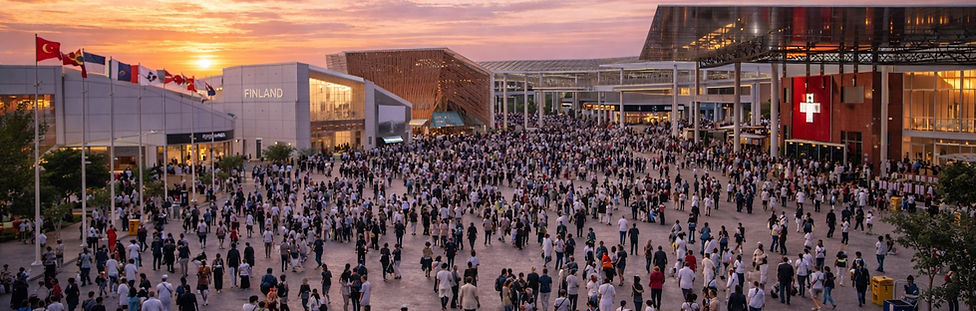
The Environment Series explores how physical spaces influence human movement, behavior, and interaction. It focuses on the spatial dynamics of live environments and how layout, flow, and structure impact both operations and experience.
In any live environment, how people move is just as important as what they experience. When movement is well-designed, environments feel smooth, intuitive, and controlled. When it is not, environments become congested, confusing, and difficult to manage.
What the Environment Series Covers
The Environment Series focuses on the spatial and movement dynamics of live environments.
Crowd flow and movement patterns
Queue design and management
Wayfinding systems and navigation
Spatial layout and positioning
Density and capacity management
Entry and exit flow
Visibility and sightlines
Bottlenecks and congestion control
These elements define how people navigate and experience physical space.

Where This Applies
The Environment Series is relevant across a wide range of live environments.
Exhibitions and large-scale gatherings
Airports and transport hubs
Retail environments and shopping destinations
Museums and cultural venues
Stadiums and arenas
Hospitality venues and destinations
Theme parks and immersive spaces
Any environment where people move through space can benefit from these principles.
How the Environment Series Connects to the Human Layer
The Environment Series focuses on space and movement, but it connects directly with other Clapnation disciplines.
Presence — how individuals position themselves
Crew — where and how crew operate
Human Operations — how teams are structured across zones
Experience — how environments feel to guests
Psychology — how people respond to space and movement
Leadership — how environments are managed in real time
Together, these disciplines ensure that environments are both functional and experiential.


